

Table of Contents
Part of The Conopticon Papers
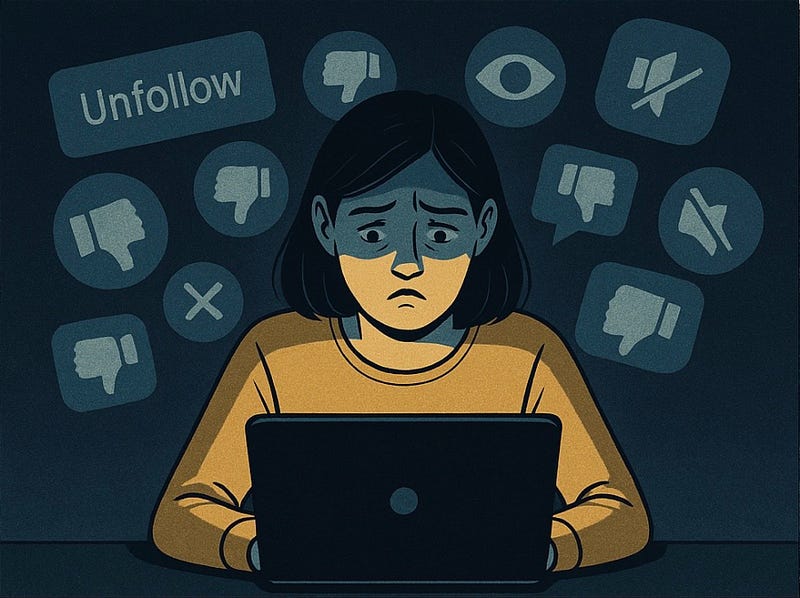
When Jeremy Bentham imagined his panopticon, he pictured a guard tower at the center of a prison. One eye, many cells, endless discipline. But the modern watchtower is not made of glass or iron. It’s made of glances, whispers, and algorithms.
We still live under surveillance.
But now the watchers are not just institutions. They are us.
Here are five ways we police each other without even realizing it:
1. Through Parenting Standards (Even if you’re not a parent, you’re still judging)
Every mother knows the silent audit:
Is your child breastfed or bottle-fed?
Screen-free or overexposed?
Homeschooled or public schooled?
The sharpest judgments don’t come from ministries of education. They come from the parent council, the playground, and the neighbour with a raised eyebrow. We learn quickly that motherhood is not just nurture, it is performance under scrutiny.
Even if you’re not a parent, you participate. I’ve heard more comments than I can count about how I raise my children, often offered as innocent advice, but weighted with comparison. It applies to how we all live our lives. The last thing anyone wants to hear is how someone else is doing it better.
We audit each other constantly:
“Are you sure you should be eating that? You should probably have a salad instead.”
“Don’t you think your child should be in a real school?”
We struggle to recommend without sounding critical. And we have an even harder time taking advice without feeling attacked.
2. Through Social Media Performance
The stage is endless, and this audience never sleeps.
One wrong word, one offbeat photo, one opinion too sharp…
And the quiet punishment arrives.
An unfollow. A frozen silence. A digital exile.
We pretend it is freedom, this sharing of ourselves. But the truth is closer to Bentham than we’d like: we post as if we are both the prisoner and the guard, measuring every word against invisible eyes.
Some of us take the IDGAF route, posting boldly and bracing for backlash. Others of us become paralyzed, overthinking every caption, every comment, every emoji. Most hover somewhere in between. We’re instead editing, censoring, smoothing our rough edges before we dare to hit “publish.”
“Do you really want to post that? It could come back to haunt you.”
“Wow, she’s oversharing again.”
We tell ourselves it’s caution. In reality, we’ve been conditioned not to offend anyone.
So we create highly curated feeds of our perfect lives, leaving no room for judgment. Or so we hope.
Our biggest fear is not privacy, it’s perception.
3. Through Workplace Conformity
The cubicle may be gone, but conformity remains. It hides in the way we dress, the jokes we laugh at, the pace of our keystrokes.
You don’t need a supervisor to correct you when your colleagues do it with a glance.
Workplaces have always disciplined us. But what’s new is how we discipline one another, filling the gaps where authority no longer speaks. The raised eyebrow in the meeting. The silence after an “inappropriate” comment.
The boundary between personal and professional life is dissolving. Your online persona bleeds into your office reputation. Privacy used to protect us. Now, one misstep in either world can ripple across both.
“That’s not really professional, is it?”
“Careful – people will think you’re not a team player.”
This is not about calling out outright bad behaviour. Boundaries are boundaries, and respect is respect. But differences, mere differences are treated as risks.
4. Through Community Rituals
Lawns trimmed to regulation height. Garbage bins placed on the curb at the right time. Children enrolled in the right programs, eating the right snacks.
These rituals appear harmless. But they remind us of the unspoken rule: belonging is conditional.
One deviation, and you feel the eyes again, neighbours who don’t need to say a word to enforce the code. The rulebook is never written down, yet everyone knows it: if you want to be accepted, do not stand out.
I grew up in a neighborhood of clipped, green, perfect lawns. To plant sedum or replace grass with wildflowers was to mark yourself as neglectful. A natural garden was read not as beauty, but as betrayal.
“The grass is getting long over there.”
“What kind of person doesn’t even shovel their sidewalk?”
The rulebook is never written down, yet everyone knows it: if you want to be accepted, do not stand out.
5. Through Silence
Perhaps the sharpest tool of all. The story we do not tell. The doubt we do not voice. The silence we hold, because speaking would cost us place and comfort.
This is where the Conopticon reveals itself fully: not as a tower, but as an atmosphere. We live within its reach every time we swallow a truth to preserve belonging. Every silence is a small surrender to the invisible watchtower we have built together.
How many times have you bit your tongue on something, not to offend but simply because you know you will be judged?
“I wouldn’t say that out loud if I were you.”
“It’s better to just keep that to yourself.”
The unpopular opinion has no place anymore. Or so it seems.
The real question: can we give each other a little room?
The genius of Bentham’s panopticon was never the architecture. It was the psychology. Once you believe you are being watched, you begin to police yourself.
Today, that belief no longer needs a tower. It needs only other people.
The question is no longer who is watching.
It is whether we will keep living as if we always are.
Were you able to relate?
This essay is part of The Conopticon Papers, my series exploring how decentralized surveillance and social judgment shape our lives.
Read Volume I: Homeschooling Under Surveillance.

Member discussion