


Table of Contents
From the north, the United States looks less like a melting pot and more like a furnace; forever insisting that what enters must liquefy.
Canada tells a different story. Ours is bilingual by statute, stitched into law. Theirs is bilingual by demographic inevitability, forty-five million Spanish speakers, more than our entire population, rising not by decree but by birth, migration, neighbourhood, ballot box.
One country legislates pluralism. The other wakes up to it.
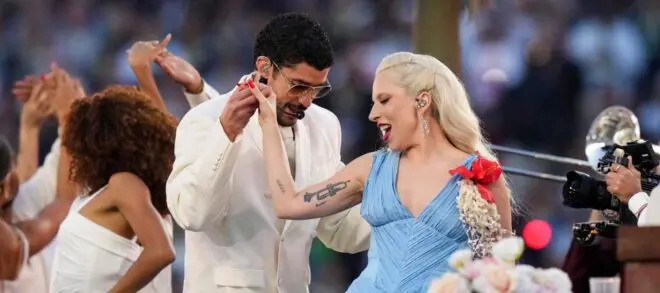
And then, for thirteen minutes beneath the cathedral lights of Levi’s Stadium, Benito Antonio Martínez Ocasio carried that inevitability to the altar.
The Super Bowl is not merely a game. It is America’s civic liturgy. Fighter jets as incense. Commercials as hymns. The halftime show as sacrament, engineered for consensus, built for swallowing whole.
He refused the wafer.
I. The Field as Scripture
He opened not with abstraction but with labour: machetes through sugarcane, bodies bent in white, invoking the jíbaro; the rural farmer, the island’s mythic spine.
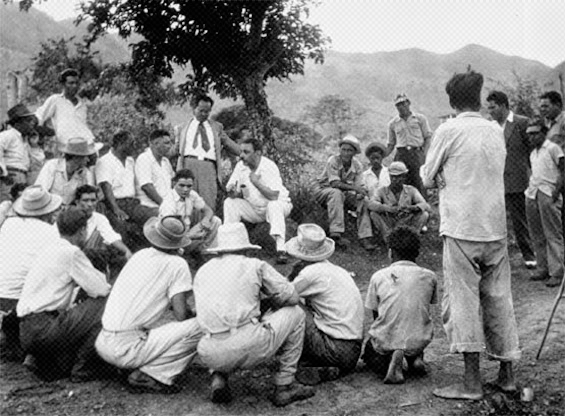
This was not aesthetic flourish. It was scripture.
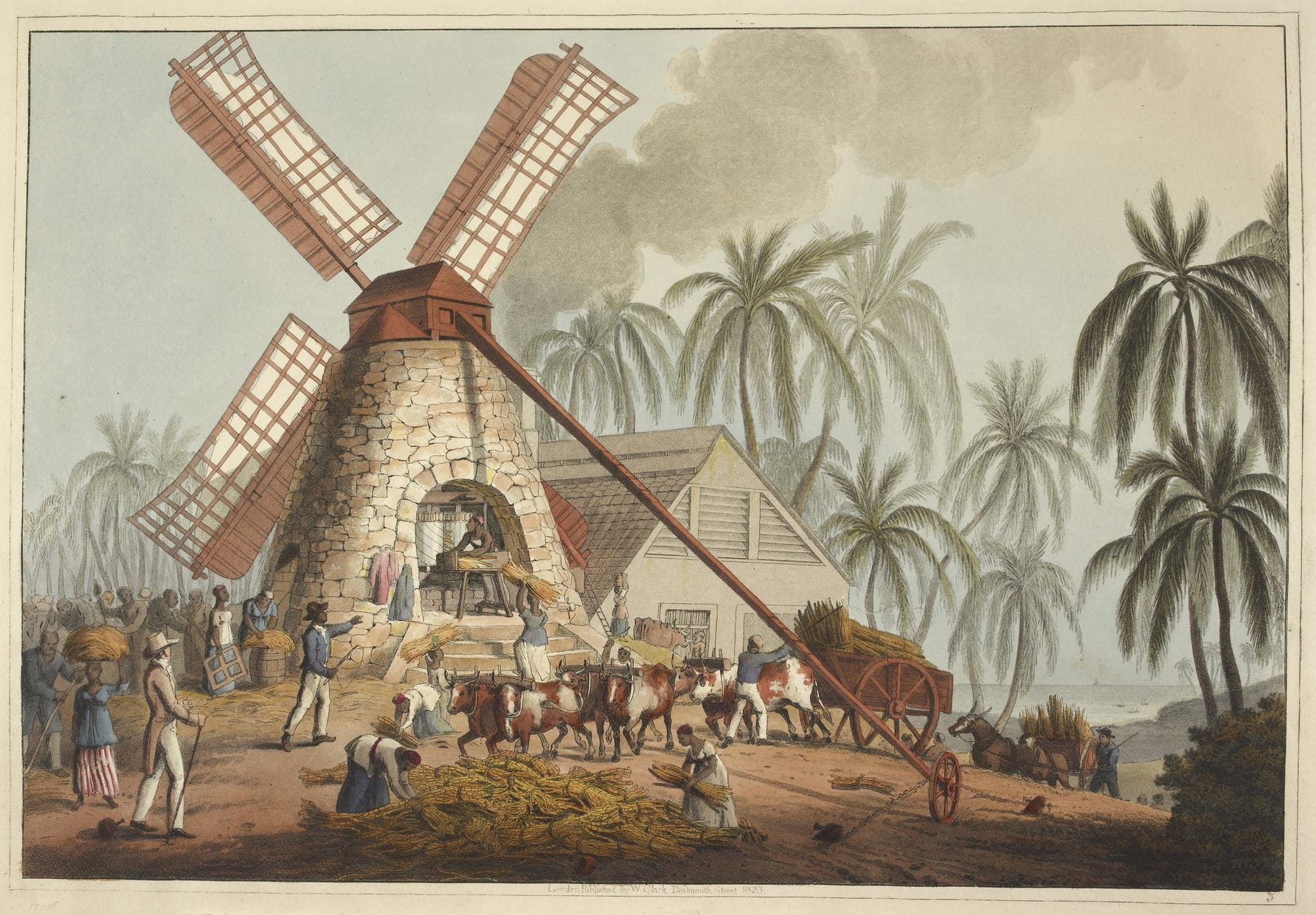
The cane field is colonial memory made visible. Plantation economies financed empires. They also financed forgetting. By bringing the field to midfield, he reversed the erasure. He made the empire watch the soil it once extracted.
Some saw choreography.
Others felt intrusion.
That difference is the point.
The performance functioned as a mirror. Not because it was ambiguous, but because it was precise. It reflected back the anxieties of those watching. For those who believe American identity must remain monolingual to remain intact, Spanish did not sound like music. It sounded like encroachment.
But culture does not erode when languages multiply. It deepens.
,_plate_V_-_BL.jpg)
II. The Banner
Every altar holds relics.
When the Puerto Rican flag unfurled, its triangle was light blue; the original shade, once criminalised under the 1948 Gag Law. Owning that banner could cost you a decade in prison. Singing its songs could make you suspect.

That blue is not decoration. It is defiance.
To raise it on the most watched broadcast in the country was not theatrical excess. It was historical reclamation. A symbol once silenced returned amplified, projected across a nation that often forgets it governs territories whose citizens cannot vote for the president who commands them.
That is not symbolism. That is paradox.
III. The Blackout
When dancers scaled sparking utility poles during El Apagón, they were not performing spectacle for spectacle’s sake. They were invoking Hurricane Maria. The privatised grid. The long dark nights. The bureaucratic drift that followed.
Semiotics is not indulgence for colonised people. It is survival. When direct speech fails, symbols speak.
And symbols unsettled those who prefer amnesia.
IV. The Word “Unintelligible”
The most repeated criticism was that the performance was “unintelligible.”
In 2026, that word is less a critique than a confession.
The United States now contains the second-largest Spanish-speaking population on earth. One in five households speak Spanish. The language is not foreign; it is foundational. It is the grocery store, the schoolyard, the courtroom, the ballot.
To call Spanish “unintelligible” is not to describe a barrier. It is to announce a refusal.
We live in an era where any lyric can be translated in seconds. Ignorance is no longer imposed. It is curated.
Culture has always required pilgrimage. Dante wrote in the vernacular so heaven and hell could be walked by ordinary readers. Bad Bunny sang in the language of his mother so that inheritance could be carried without translation.
The refusal to listen did not originate on the stage.
It rose from the pews.
V. América
At the end, he offered a benediction: “God bless America.”
Then he named the hemisphere.
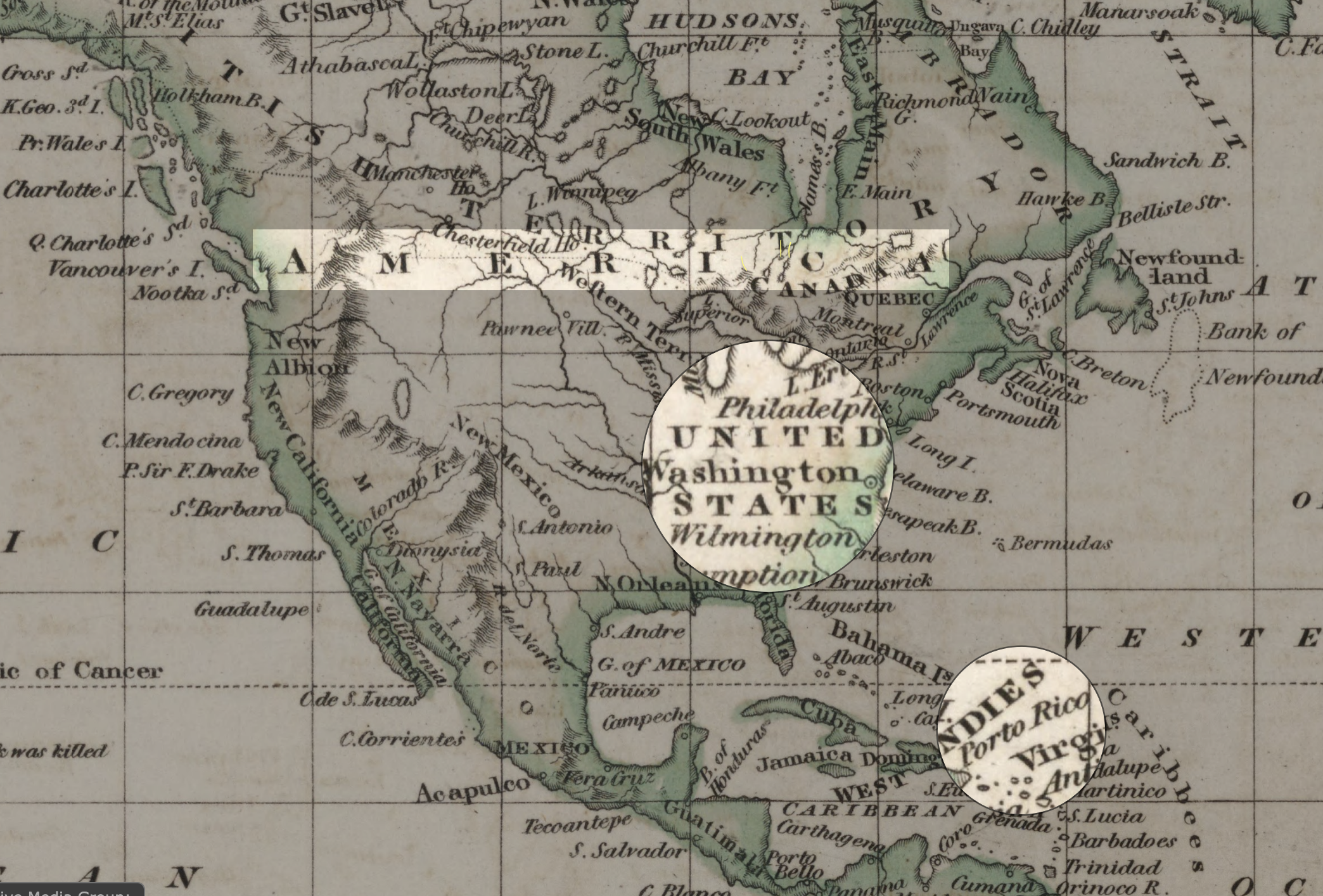
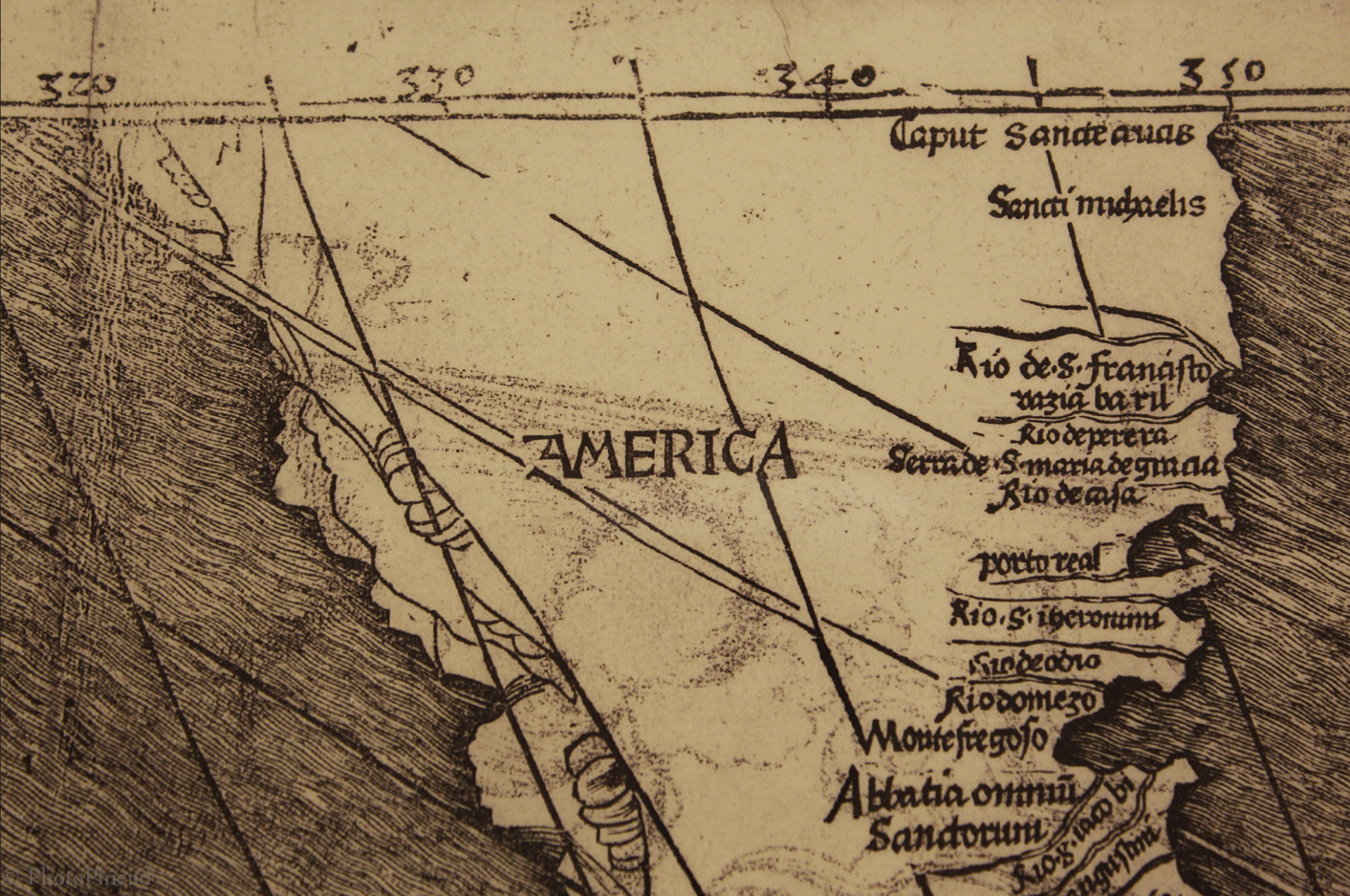
In Spanish, América is not a nation-state. It is a continent. Arctic to Patagonia. Ice to jungle. The United States does not own the word; it inherited it and narrowed it.
From Canada, this narrowing has always been visible. I live in North America. I am not “American” in the colloquial sense. Language compresses geography. Power compresses language.
By rolling the map back open, he did not insult the United States. He reminded it of its coordinates.
And here lies the quiet irony: Puerto Ricans are U.S. citizens. To label their cultural expression “un-American” is to reveal how fragile the category has become. Belonging, in this vision, is conditional. Heritage must be sanded down to fit the myth.
Speak English.
Tone it down.
Make it marketable.
He did not.
He braided citizenship and ancestry into one public act.
Not assimilation. Integration.
VI. The Heresy
The Super Bowl is a corporate holy day. Militarised flyovers. Billion-dollar advertisements. Ritualised patriotism. It asks for unity without interrogation.
Into that sanctuary he carried critique. Not disguised, not diluted, but choreographed.
The genius of the performance was not that it smuggled meaning. It declared it. Those trained to read saw it instantly.
El que sabe, sabe. He who knows, knows.
The rest called it noise.
But perhaps the deeper question is not why so many missed the message. It is why we have grown suspicious of messages at all. Spectacle without inheritance is easy to consume. Spectacle that remembers demands reckoning.
For thirteen minutes, the cane field replaced the fifty-yard line. The outlawed blue flew above a corporate altar. Spanish filled the nation’s loudest broadcast without apology or subtitle.
That was not an affront to America.
It was America. Translated back into its full hemisphere.
Member discussion